Linen
shirts, trousers, dresses, tablecloths, curtains
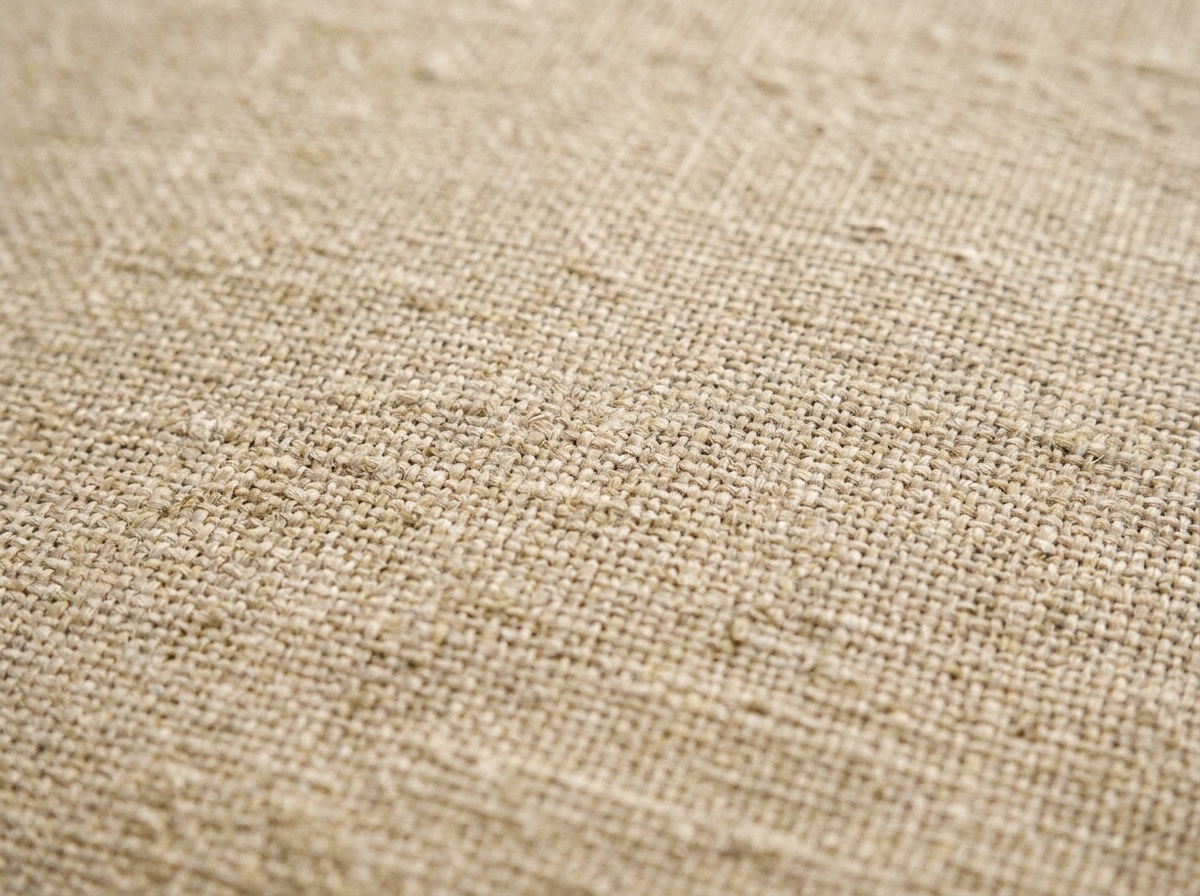
Linen comes from the fibers of the flax plant, spun into yarn and woven in a plain weave (over one thread, under one thread). The fiber itself is thicker and less uniform than cotton, which is why linen cloth has that slightly slubby, textured surface even in a fine weave. Weights for garment-grade linen usually fall between 150 and 250 g/m². Anything under that is closer to a linen voile or handkerchief linen; anything heavier moves into linen canvas or upholstery territory.
Linen holds a crease better than almost any other natural fiber, which is what gives it that structured, slightly rumpled look. It has no stretch at all, so it needs a bit more ease built into a pattern than a knit would. It's also stronger wet than dry and gets softer with every wash, which is why well-worn linen shirts feel better than new ones. It wrinkles fast and shows it, and it shrinks noticeably on the first wash (often 6-8%), so prewashing before cutting is not optional.
Linen is a solid choice for warm-weather shirts, loose trousers, unstructured jackets, and anything meant to look a little undone on purpose. It presses to a sharp edge, which makes it good for garments with topstitching or pleats. It's a harder fabric to hem invisibly and can fray at the cut edge, so finishing seams matters more here than on a stable cotton.