Gingham
shirts, dresses, aprons, children's wear
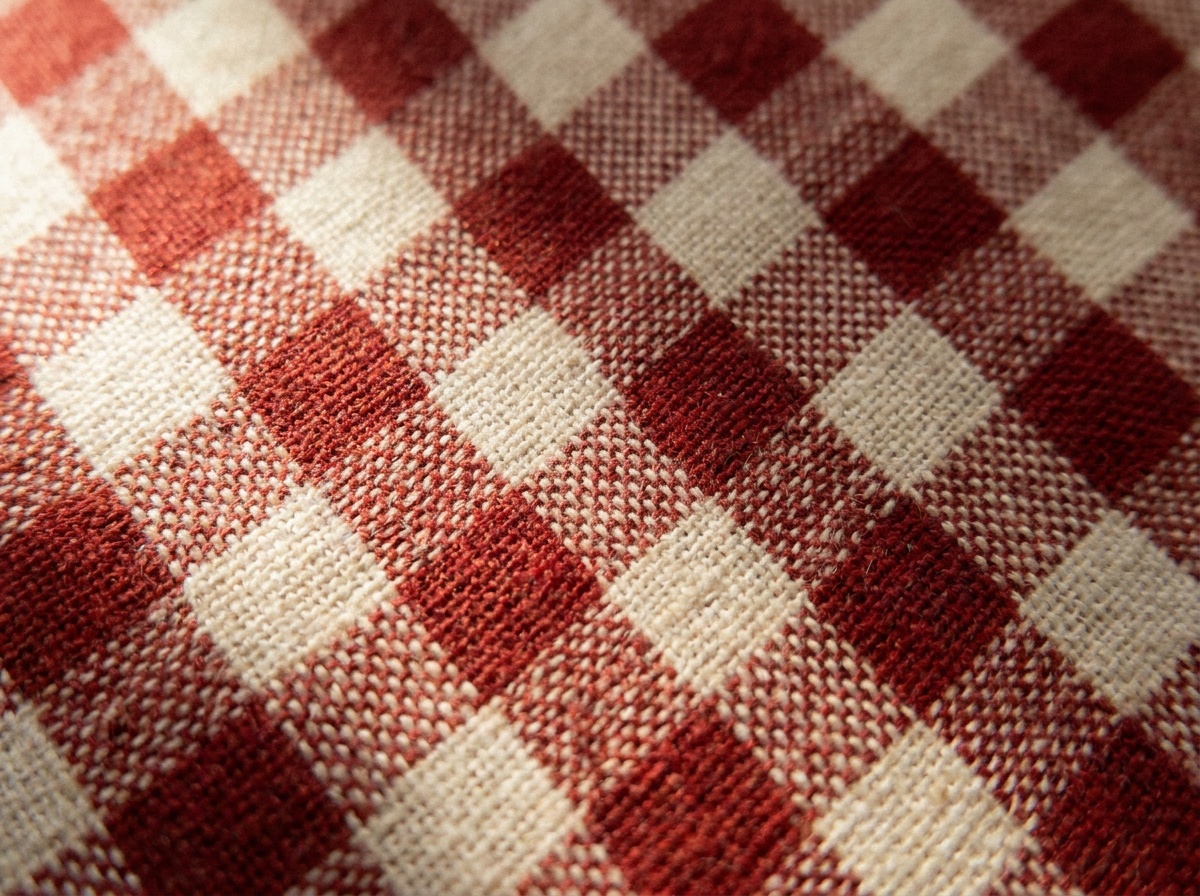
Gingham is a plain-weave cotton whose check comes from the yarn, not from print. Dyed and white yarns alternate in even blocks along both the warp and the weft, and where a colored warp block crosses a colored weft block the cloth reads full color, where white crosses white it reads white, and the overlaps of one over the other give the familiar mid-tone squares. Because the pattern is woven from dyed yarn, it is identical on both faces, so there is no right or wrong side to track when you cut. Weights run from about 100 g/m² to 160 g/m².
The classic form uses an even check, meaning the colored and white blocks are the same width, which produces a regular grid. That grid is a gift and a trap at the machine. It gives you a built-in guide for straight seams and even topstitching, but it also shows any mismatch at a seam or a plaid that runs off-grain, so cut on-grain and match checks across seams and at the center front. The crisp, light hand presses flat and holds a crease, and the tight plain weave frays at a moderate rate that a zigzag or flat-fell seam controls.
Gingham goes into shirts, summer dresses, aprons, tablecloths, and children's clothes, where the checked cloth is a long-standing default. It sews on a standard 80/12 needle without fuss and behaves like any light plain-weave cotton, so the skill it asks for is in the cutting and matching rather than the stitching.